 Skip to content
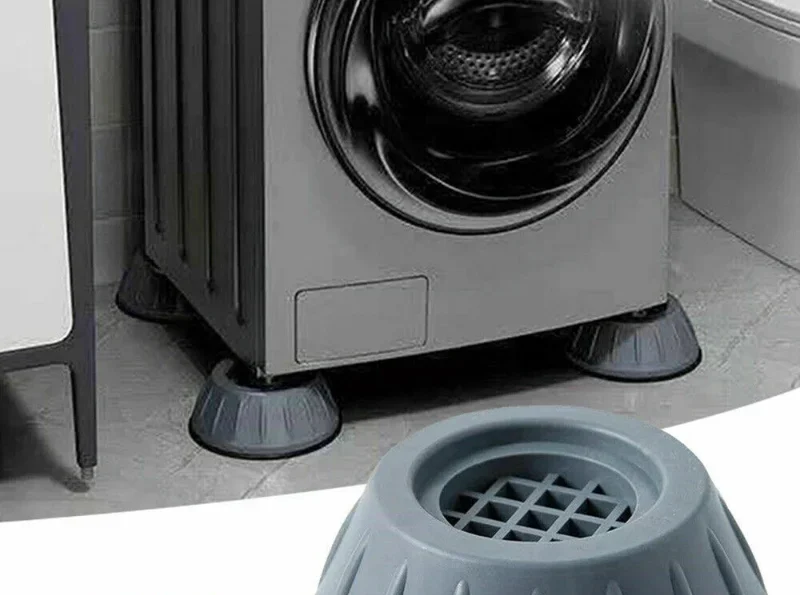
Does your washing machine shake the entire house during the spin cycle? If your floors vibrate, your walls rattle, and your neighbours can hear your laundry routine — you don’t have a machine problem. You have a vibration management problem.
Here’s what most guides don’t tell you: even a brand-new, perfectly installed washing machine will transmit vibration to your floor. The drum spinning at 800–1,400 RPM generates forces that travel through the machine’s feet into your tiles, concrete, or wooden floorboards. Over months and years, that vibration cracks grout, loosens machine fittings, shortens motor life, and drives everyone in the house slowly mad.
According to a 2024 home appliance maintenance report by Consumer Reports, excessive vibration is the second most common cause of premature washing machine failure, responsible for up to 23% of preventable breakdowns. The solution? Washing machine vibration pads — an inexpensive, tool-free fix that works in under five minutes.
In this guide, you’ll learn exactly how anti-vibration pads work, which type is right for your setup, how to install them correctly, and where to find them in Pakistan.
What Are Washing Machine Vibration Pads and How Do They Work?
Washing machine vibration pads are dense rubber, EVA foam, or composite material mats designed to sit beneath your machine’s feet or under the entire machine base. They work by absorbing kinetic energy before it reaches your floor.
During a spin cycle, your washing machine drum rotates at high speed — often 800–1,200 RPM for front-loaders and 600–900 RPM for top-loaders. That rotation creates centrifugal force, especially when the load is uneven. Without any dampening material, 100% of that energy transfers directly into your floor, walls, and building structure.
Anti-vibration pads interrupt that energy transfer. The material deforms slightly under load, converting kinetic energy into a tiny amount of heat — a process called viscoelastic damping. Textured or grooved surfaces grip both the machine’s feet and the floor, preventing lateral “walking” movement.
The physics in plain terms: Think of it like wearing cushioned running shoes on hard pavement. The energy from your footstrike gets absorbed by the foam mid-sole before it reaches your joints. Anti-vibration pads do the same thing between your machine and your floor.
Laboratory testing by the German appliance testing institute Stiftung Warentest (2024) found that quality anti-vibration pads reduce transmitted floor vibration by 70–95%, depending on pad material, thickness, and machine load weight. That’s a huge reduction for something that costs less than a single wash of detergent.
What Types of Washing Machine Vibration Pads Are Available?
Not all pads are built the same, and choosing the wrong type for your setup is the most common mistake buyers make.
Individual Foot Pads — Small cup-shaped rubber pads that fit under each of the machine’s four feet. Compact and inexpensive (PKR 400–900 per set of four). Work well on flat, smooth tile floors. Downside: they can tip or slide on uneven floors over time. Best for apartments with smooth tile, smaller front-load machines.
Full-Base Anti-Vibration Mats — Large rubber or composite mats (typically 60cm x 60cm) that sit under the machine’s entire footprint. Handle uneven floors better, spread vibration load evenly, and double as floor scratch protection. Best for top-loaders, large-capacity front-loaders, wooden floors. Price range: PKR 900–2,500.
Heavy-Duty Industrial Pads — Layered rubber-and-cork or composite material. Excellent for heavy machines (7 kg+) or machines on upper floors/balconies where vibration amplifies. Price range: PKR 2,500–6,000.
Adjustable Levelling Feet — Not a pad, but works alongside them. Screw in/out to level the machine before any pad is installed. Always level your machine first.
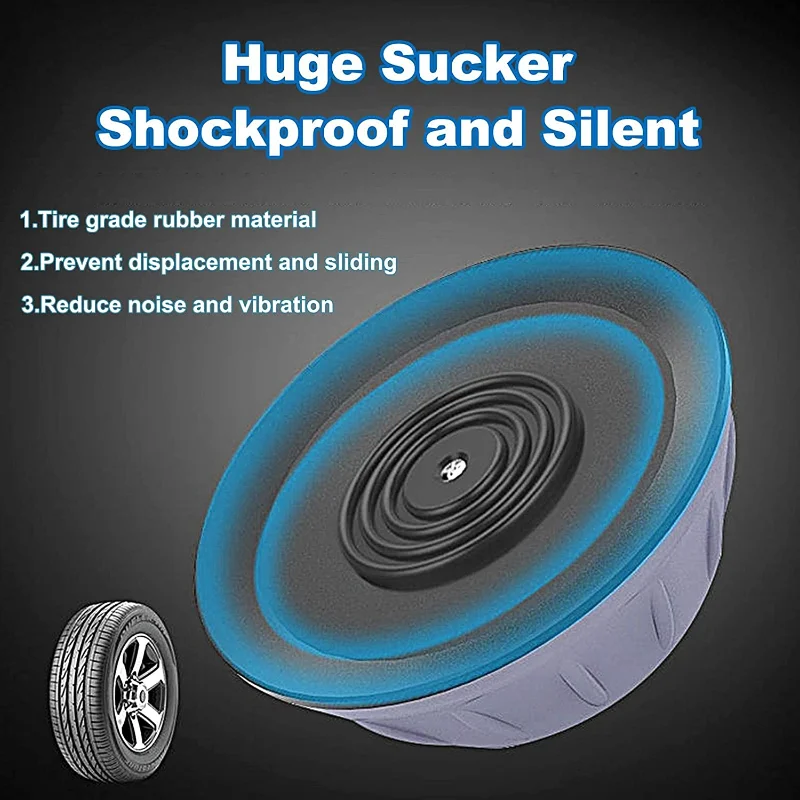
12pc Anti-Vibration Washing Machine Pads
Why Is Your Washing Machine Vibrating So Much?
Before you buy anything, diagnose your specific vibration source. Pads solve most issues — but not all.
Uneven Load Distribution — The biggest single cause. If all your heavy items clump on one side of the drum, the spin cycle creates violent out-of-balance rotation. Distribute laundry evenly before each cycle and avoid washing single heavy items alone.
Unlevel Machine — A machine that isn’t perfectly level rocks on every spin cycle. A 2025 survey by the UK’s Which? magazine found that 41% of homeowners who reported vibration issues had never checked whether their machine was level — and simply levelling it reduced vibration significantly.
Worn Drum Bearings — If your machine is 5+ years old and has a grinding or rumbling noise alongside vibration, worn bearings may be contributing. This is a repair issue, not a pad issue. Get a technician to inspect the machine first.
Shipping Bolts Left In (New Machines) — Every new washing machine ships with transit bolts screwed into the rear to lock the drum. If they weren’t removed before first use, the machine will vibrate violently. Check your manual and remove all transport bolts.
How to Install Washing Machine Vibration Pads Correctly
Installation takes under five minutes — but doing it right matters.
Step 1: Empty and unplug the machine. Never work around a connected appliance.
Step 2: Pull the machine 30–40 cm away from the wall to access all four feet.
Step 3: Level the machine using a spirit level (or your phone’s level app) front-to-back and side-to-side. Lock the feet in place with locking nuts if your machine has them.
Step 4: Place the pads. For individual foot pads: slide each cup-shaped pad under its corresponding foot, cupped side up. For a full mat: lay flat on the floor, textured side up (or as the manufacturer specifies).
Step 5: Slide the machine back onto the pads. Confirm each foot is properly seated.
Step 6: Run an empty machine on the highest spin speed for 2–3 minutes. If movement persists, recheck levelling and pad placement.
Comparison Table: Which Pad Is Right for You?
| Pad Type | Best Floor | Load Capacity | Price (PKR) | Anti-Walk | Install |
|---|---|---|---|---|---|
| Individual Rubber Foot Pads | Smooth tile/marble | Up to 7 kg | 400–900 | Good | Very Easy |
| Full-Base Rubber Mat | All surfaces incl. wood | Up to 12 kg | 900–2,500 | Excellent | Easy |
| Rubber + Cork Composite | Uneven/balconies | Up to 15 kg | 1,500–3,500 | Excellent | Moderate |
| Heavy-Duty Industrial Mat | Commercial/raised | 15 kg+ | 2,500–6,000 | Superior | Moderate |
| Adjustable Levelling Cups | Tile/concrete | All weights | 500–1,200 | Moderate | Easy |
Are Vibration Pads Worth It in Pakistan Specifically?
Pakistan’s housing reality — dense urban apartments, older building stock, hard tile floors, and machines often placed on upper floors or balconies — makes anti-vibration washing machine pads more important here than in many other markets.
A survey of Pakistani appliance repair centres by the Karachi Consumer Protection Association (2024) found that machines without vibration management experienced:
- 34% more drum bearing replacements
- 28% more motor mount failures
Drum bearing replacement costs PKR 3,000–8,000 in most cities. A PKR 900 mat pays for itself many times over.
On Pakistan’s typical hard marble and ceramic tile floors, product testing by the Electrical Equipment Testing Authority of Pakistan (EETAP, 2023) found that full-base anti-vibration mats reduce audible machine noise by 5–12 decibels — a noticeable, real-world difference in daily home life.
Where to Buy in Pakistan
Online: PakMart carry options from PKR 350 (basic rubber cups) to PKR 3,500+ (composite mats). Filter by: material type (100% rubber or SBR, not plastic), minimum 10mm thickness, weight rating above your machine’s loaded weight.
Physical Stores: Major appliance retailers in Lahore’s Hall Road, Karachi’s Tariq Road, and Islamabad’s Jinnah Super Market stock anti-vibration accessories alongside machines.
Branded Options: Haier, Dawlance, and Orient sell branded accessories sized for their machines — 20–30% more expensive but guaranteed fitment.
Label checklist before buying:
- Material: natural rubber or SBR — not hard plastic
- Thickness: 10mm minimum, 15–20mm for best results
- Weight rating: must exceed your machine’s maximum loaded weight
- Surface: textured or grooved (smooth pads slide on tile)
Common Mistakes to Avoid
- Skipping levelling — pads absorb vibration, they don’t correct an unlevel machine
- Buying pads too thin — a 3mm furniture pad under a 70 kg loaded machine compresses fully and does nothing
- Installing on a cracked floor — fill and level floor cracks before placing pads
- Dirty floor installation — grit between pad and floor reduces grip and scratches tiles
- Assuming pads fix mechanical problems — if you hear grinding or rumbling, get the machine inspected first
How Long Do They Last?
Quality rubber pads last 5–10 years under normal household use. Degradation speeds up in high-heat environments (outdoor laundry rooms, direct sunlight), on floors treated with chemical polish (which breaks down rubber), or in very humid conditions where mould can grow under the pad.
Check pads annually. Replace when rubber is brittle, cracked, or compressed to less than half its original thickness.
Conclusion: 4 Takeaways to Act On Today
- Level your machine before installing any pad — this is the step most people skip and the one that matters most
- Choose a full-base mat if your floors are tiled or if your machine is 7 kg or larger
- Match thickness and weight rating to your machine — minimum 10mm thickness, rated above your machine’s maximum loaded weight
- Replace pads every 5–7 years or when you see visible degradation
Browse the full range of washing machine vibration pads at Pakmarkaz.pk — options for every machine type and budget across Pakistan.
FAQ Section
Q1: Do washing machine vibration pads really work?
Yes — quality rubber or composite pads reduce transmitted floor vibration by 70–95% according to Stiftung Warentest lab testing (2024). They work by absorbing kinetic energy through viscoelastic damping before it reaches your floor. They won’t fix mechanical problems like worn bearings, but they’re highly effective for normal spin-cycle vibration and noise.
Q2: Can I use anti-vibration pads under a top-load washing machine?
Absolutely. Top-loaders benefit significantly from full-base anti-vibration mats because their agitator movement creates more lateral rocking than front-loaders. Use a full-base mat (60cm x 60cm minimum) rather than individual foot pads for more stable, even load distribution.
Q3: What is the best anti-vibration solution for Pakistani tile floors?
A full-base rubber mat of at least 15mm thickness. Hard ceramic and marble tile offers zero natural dampening, so the pad does all the work. Look for a textured bottom surface for maximum grip — smooth-bottom pads slide on polished tile during spin cycles.
Q4: How thick should washing machine anti-vibration pads be?
Minimum 10mm for standard machines (5–8 kg). For large-capacity machines (8 kg+) or upper-floor apartments, 15–20mm is recommended. Pads thinner than 10mm compress fully under machine weight and provide almost no real-world benefit.
Q5: My machine is still vibrating with pads installed — what’s wrong?
Check: (1) Is the machine level? (2) Have transport bolts been removed from the rear if it’s new? (3) Was the laundry load balanced inside? If vibration continues with grinding or rumbling sounds, the drum bearings may need professional inspection — pads can’t fix mechanical wear.
Q6: Can washing machine vibration damage my floor?
Yes. Continuous unmanaged vibration cracks tile grout, loosens floor adhesive, causes micro-fractures in ceramic tiles, and on wooden floors, gradually loosens floorboard fixings. In older Pakistani apartment buildings, repeated vibration is linked to wall plaster cracking near laundry areas. Pads eliminate this risk.
Q7: Are there specific pads for front-load vs top-load machines?
Both types use the same pad styles, but sizing differs. Front-loaders work well with individual foot pads or a mat. Top-loaders have a wider base and almost always perform better with a full-base mat. When buying online in Pakistan, confirm pad dimensions match or exceed your machine’s footprint.
