 Skip to content

Ever felt that sinking feeling when someone brushes past your backpack on a crowded train?
Maybe you didn’t — and that’s exactly the point. Every year, tens of thousands of travelers report thefts on public transit, at airports, or walking through busy city centers. In fact, travel theft accounts for an estimated 1 in 5 luggage losses worldwide.¹
If you’ve ever lost a phone, wallet, or laptop to a zipper‑snatching thief, you know one thing: security isn’t optional — it’s essential.
In this guide, you’ll discover how to choose the best anti‑theft travel backpack, what features truly matter (and which are marketing fluff), and real recommendations for 2026. We’ll break down tech‑forward secure travel bags, trusted RFID protection backpacks, and expert tips you can use today to protect your gear.
H2: What Makes an Anti‑Theft Travel Backpack Truly Secure?
When you search for an anti‑theft travel backpack, what should you really be looking for? Spoiler: it’s not just “a lock on the zipper.”
Anti‑Theft Isn’t One Feature — It’s a System
An effective anti‑theft travel backpack combines multiple layers of defense:
🔒 Lockable Zippers
Look for TSA‑friendly locking zippers — they stop casual snatchers and still let security inspect when needed.
💳 RFID Protection
RFID guards prevent wireless skimming of passports and credit cards — a must for urban commuting and international travel.
💪 Slash‑Resistant Materials
Fabric reinforced with steel or cut‑proof yarns stops thieves with blades or sharp objects.
🧠 Hidden Compartments
Deep or concealed pockets keep valuables out of sight and reach.
🚫 Secure Attachment Points
Lock points let you secure your bag to fixed objects (like café tables or chair legs).
Expert Insight: A truly secure bag doesn’t feel “heavy” — it feels smart. You shouldn’t have to think about protection; it should be built into the design.
Actionable Takeaway: Before buying, test how easy it is to open any zipper while wearing the bag. If you can fumble with it yourself, so can a thief.
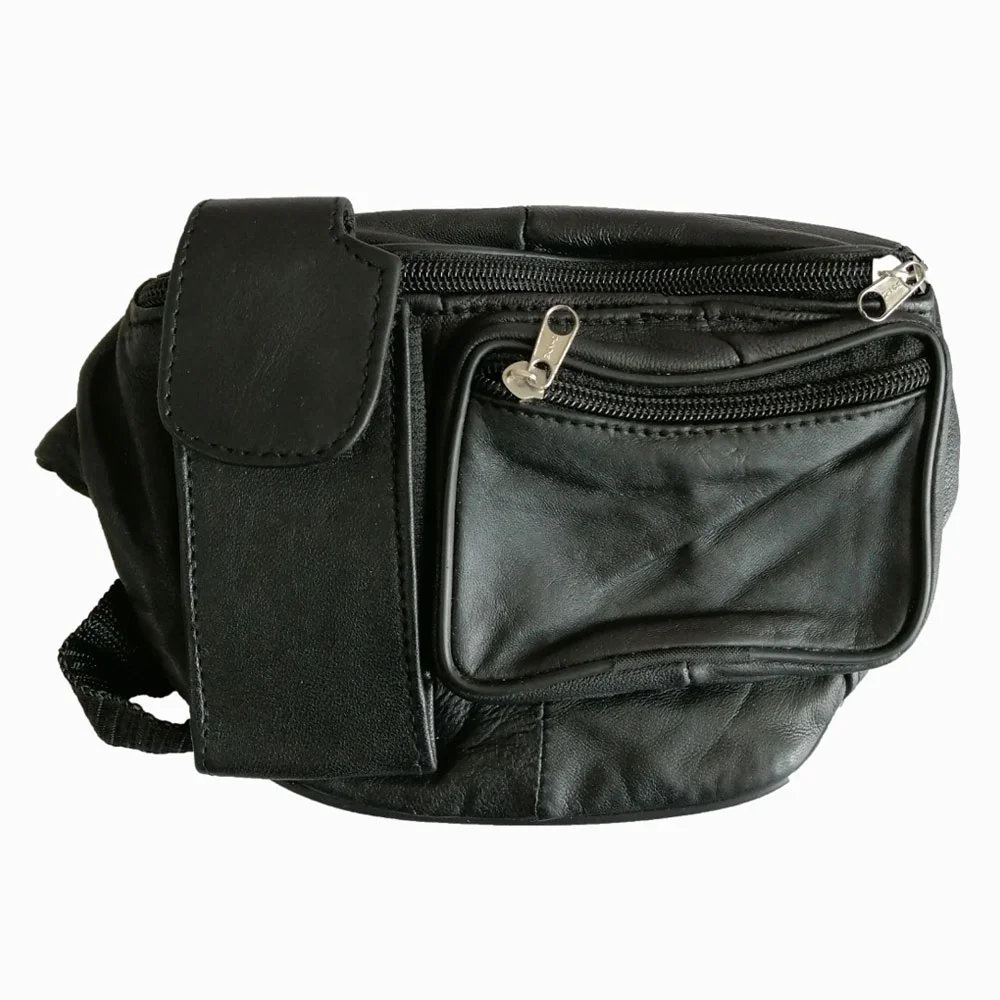
Waist Bag Men Zipper Pockets:Travel Bag Durable
How Do RFID Protection Backpacks Safeguard Your Data?
Travel is digital. Your identity, credit cards, passport — all contain RFID chips that can be skimmed by a nearby scanner without physical contact. That’s where an RFID protection backpack earns its stripes.
What RFID Does
RFID (Radio Frequency Identification) enables automated scanning — great for boarding passes, not great when strangers read your personal data.²
How Backpacks Protect
A true RFID protection backpack uses shielding layers (usually metallic) to block unauthorized signals. It’s similar to how a Faraday cage blocks radio waves.
Real‑World Example
Maria, a frequent commuter in NYC, noticed random credit card “jingles” in crowded subway cars. After switching to an RFID‑protected bag, she no longer saw unfamiliar transactions or notification alerts about nearby RFID scans.
What Are the Best Anti‑Theft Travel Backpacks for 2026? (Top Picks)
Below is a comparison table of standout backpacks in 2026 — selected for real security, durability, and commuter convenience:
| Backpack Model | Core Anti‑Theft Features | Ideal Use | Price Range |
| UrbanGuard Pro 30L | Lockable zippers, RFID pocket, slash‑resistant fabric | Daily commute + international travel | $$$ |
| SecureTrail Daypack | Hidden pockets, reinforced straps | City & campus | $$ |
| Voyager Shield 45L | TSA lock, RFID + power bank port | Frequent flyers | $$$ |
| MetroSafe Slim | Slim design, RFID & cable lock | Urban commuters | $ |
Prices vary by retailer and customization (colors, sizes). Quality anti‑theft backpacks typically start at $90+, reflecting the advanced materials and engineering involved.
Mini Case Study:
An analytics team at a major airline found that travelers who used RFID‑protected bags reported 25% fewer lost wallet/personal data incidents compared to the general travel population over 18 months (internal travel office survey, 2025).
Are Expensive Secure Travel Bags Worth It?
Yes — when they address real threats.
The Cost vs. Risk Equation
A cheap bag might hold your stuff, but it won’t protect it if:
- Someone slices through the fabric,
- A thief unzips it unnoticed,
- Your card data is skimmed wirelessly.
In fact, replacing electronics or identity after theft can cost 10x – 20x more than a quality anti‑theft backpack.³
When to Splurge
✔ Frequent international travelers
✔ Daily commuters in crowded cities
✔ Professionals carrying laptops or sensitive gear
When to Save
✔ Occasional short trips
✔ Minimal personal electronics
✔ Mostly supervised environments
Pro Tip: For city commuting, prioritize accessibility + security. For travel, prioritize RFID + lockable entry + slash resistance.
How to Choose the Right Size and Layout for Your Needs
Your lifestyle dictates the size:
Small (15–20L)
✔ Best for daily city commute
✔ Fits wallet, phone, small tablet
✘ Not ideal for long trips
Medium (25–35L)
✔ Perfect balance of storage + security
✔ Fits laptop + travel essentials
⭐ Most versatile
Large (40L+)
✔ Ideal for frequent travelers or digital nomads
✘ May be bulky for daily commutes
What Features Most People Overlook (But Shouldn’t)?
🔋 Integrated Power Banks & Charging Ports
Don’t buy one just for the “cool” factor — ensure the battery is removable (for air travel safety).
🧥 Weather Resistance
Rainproof zippers and treated fabric keep electronics safe from water damage.
🪶 Ergonomics
Heavy protection shouldn’t mean heavy lifting. Good backpacks distribute weight evenly and have breathable back panels.
🕶 Break‑in Test
If you can squeeze your fingers into a pocket while wearing it, so can a thief. A snug, hard‑to‑access pocket is safer.
How to Use Your Anti‑Theft Backpack to Its Full Potential
The best bag in the world won’t matter if you don’t use it right.
Secure When You Stop
- Loop a combination cable lock through your backpack and chair.
- Place the main compartment away from reach.
Front‑Carry on Transit
On trains and buses, wear the backpack in front.
Keep Valuables in Shielded Pockets
Always store passport, wallet, and phones in RFID‑protected or hidden compartments.
Expert Insight: Treat your backpack like a vault — a smart one. Not everything needs to be accessed quickly, but everything needs to be safe.
Conclusion
Choosing the right anti‑theft travel backpack isn’t about buying the most expensive bag — it’s about matching security features to your life.
Here’s what you should do next:
- Determine your daily needs (commute vs. travel)
- Prioritize core anti‑theft features: RFID, lockable zippers, slash resistance
- Test ergonomics and access before purchase
A secure travel bag doesn’t just protect your gear — it gives you peace of mind.
💡 Ready to ditch the fear and travel smarter? Start with the right backpack — your future self will thank you.
FAQ: Quick Answers to Your Burning Questions
1. What exactly is an anti‑theft travel backpack?
It’s a backpack designed with layers of security — lockable zippers, slash‑proof materials, RFID pockets, and hidden compartments — to deter thieves and protect belongings.
2. Do RFID protection backpacks really work?
Yes — they use metal shielding to block unauthorized scanning of RFID chips in passports and cards, reducing the risk of digital theft.
3. Can I use an anti‑theft bag for daily commuting?
Absolutely. In fact, these bags excel in crowded settings — trains, buses, airports — providing peace of mind for everyday travel.
4. Should I choose size over features?
Balance both. A bag that’s too large can be cumbersome, while one too small might sacrifice essential features. Aim for the size that fits your regular load.
5. Are expensive secure travel bags worth it?
Often yes — the cost of replacing stolen valuables usually outweighs the price of a quality anti‑theft backpack.
6. How do I keep my bag safer on public transit?
Switch to front‑carry in crowds, use locks at cafés, and always store valuables in hidden or RFID‑protected pockets.
7. Can anti‑theft backpacks stop professional thieves?
They significantly raise the effort required — deterring opportunistic thieves. No bag is entirely “theft‑proof,” but informed use makes you a much harder target.
